
Refined Sunflower Oil Smoke Point Explained: Temperature, Frying Safety & Cooking Guide


If you regularly cook with sunflower oil, you’ve probably wondered how hot it can get before it starts to smoke. Understanding the refined sunflower oil smoke point is important for home cooking, professional kitchens, restaurants, and industrial food production.
Sunflower oil is widely appreciated for its neutral flavor, versatility, and suitability for different cooking methods. But not all sunflower oils behave the same way under heat.
Refined sunflower oil, unrefined sunflower oil, and high-oleic sunflower oil can have different thermal characteristics. Choosing the right grade helps maintain cooking quality and reduce unnecessary oil degradation.
In this guide, we’ll explain the smoke point of refined sunflower oil, compare cooking oil grades, explore safe frying temperatures, and explain what international buyers should consider when sourcing Ukrainian sunflower oil.
What Is the Smoke Point of Refined Sunflower Oil?
The smoke point is the temperature at which heated oil begins producing a continuous, visible stream of smoke under defined conditions.
For many commercially refined sunflower oils, a commonly cited smoke point is approximately 232°C (450°F).
Commonly cited refined sunflower oil smoke point
232°C
/ 450°F
Indicative reference value, not a guaranteed temperature for every product or batch.
The exact smoke point can vary depending on refining quality, free fatty acid content, oil composition, storage history, and measurement conditions.
A higher smoke point can make an oil useful for high-temperature cooking, but it does not mean the oil can be heated indefinitely without deterioration.
Why Does Smoke Point Matter?
When cooking oil reaches its smoke point, it begins to break down more noticeably.
This can cause undesirable flavors, unpleasant odors, and changes in oil quality.
The American Heart Association advises against using oil that has started smoking and recommends avoiding the repeated reheating of cooking oils.
For households and commercial kitchens, monitoring temperature is an important part of food preparation.
Sunflower Oil Smoke Point by Type
Different sunflower oil grades have different characteristics because of processing methods and fatty-acid composition.
| Sunflower oil type | Indicative smoke point | Recommended applications |
|---|---|---|
| Refined sunflower oil | Around 232°C / 450°F | Sautéing, roasting, frying |
| Refined deodorized sunflower oil | Often around 232°C / 450°F | General cooking and foodservice |
| High-oleic refined sunflower oil | Product-dependent, often high | Demanding frying applications |
| Unrefined sunflower oil | Generally lower and variable | Dressings and lower-temperature applications |
| Cold-pressed sunflower oil | Varies by product | Cold dishes and cooking suited to its specifications |
These are general comparisons, not laboratory specifications. The term high-oleic refers to fatty-acid composition, not a guaranteed smoke-point figure.
Is Refined Sunflower Oil Good for Deep Frying?


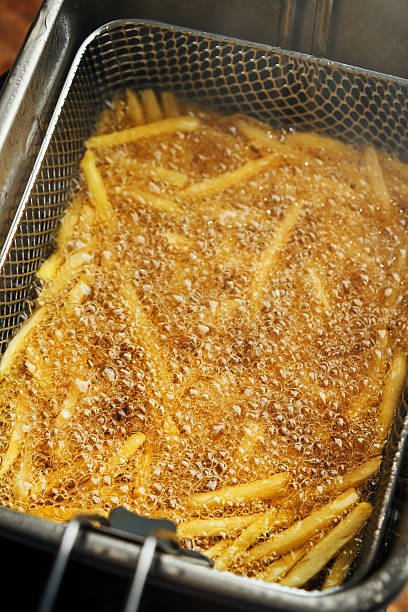
Yes. Refined sunflower oil is commonly used for deep frying because of its relatively neutral flavor and suitability for many high-temperature cooking applications.
Many fried foods are prepared at approximately 160–190°C (320–374°F), depending on the recipe and equipment.
This range is below the commonly cited smoke point of refined sunflower oil.
However, maintaining a temperature below the smoke point does not completely prevent oxidation. Oil also deteriorates with prolonged heating, exposure to oxygen, and repeated cooking cycles.
Recommended Cooking Temperature Guide
| Cooking method | Typical temperature | Practical guidance |
|---|---|---|
| Light sautéing | 120–160°C | Use moderate heat |
| Pan frying | 160–190°C | Monitor pan temperature |
| Deep frying | 160–190°C | Use a food thermometer |
| Stir-frying | Variable, often high | Avoid prolonged empty-pan heating |
| Oven roasting | 180–220°C oven setting | Oil temperature differs from oven air temperature |
| Baking | Recipe-dependent | Follow recipe instructions |
The values are illustrative cooking ranges, not universal safety limits.
Best Practices for Frying with Sunflower Oil
To maintain cooking quality, choose a suitable refined oil, avoid excessive temperatures, and keep equipment clean.
A thermometer is particularly useful because oil can become hotter than expected before visible smoking occurs.
Never leave heating oil unattended. If oil catches fire, turn off the heat if safe and use an appropriate fire blanket or suitable extinguisher. Never pour water onto a cooking-oil fire.
Refined vs. Unrefined Sunflower Oil Smoke Point
The refining process affects the characteristics of sunflower oil.
Refining can reduce free fatty acids, pigments, volatile compounds, and certain other substances that influence appearance, taste, and heat performance.
Refined sunflower oil is therefore often selected for neutral-tasting cooking applications.
Unrefined sunflower oil may retain more characteristic flavor compounds, making it attractive for dressings and selected lower-temperature uses.
Neither description automatically makes one oil healthier in every situation.
Does Deodorization Increase the Smoke Point?
Deodorization removes volatile odor-producing compounds, usually through steam treatment under vacuum.
A well-controlled refining process can improve the sensory quality of sunflower oil and influence its cooking performance.
However, deodorization alone does not establish a universal smoke point.
Buyers should evaluate the finished product specification rather than assuming every deodorized sunflower oil behaves identically.
High-Oleic Sunflower Oil vs. Regular Sunflower Oil
High-oleic sunflower oil is produced from sunflower varieties with a higher proportion of oleic acid.
Conventional sunflower oil generally contains more linoleic acid, a polyunsaturated fatty acid.
Because monounsaturated oleic acid is generally less susceptible to oxidation than polyunsaturated linoleic acid, high-oleic sunflower oil can offer improved stability during demanding frying operations.
Research comparing conventional and high-oleic sunflower oils during frying has reported stronger oxidative stability for high-oleic varieties.
Which Sunflower Oil Is Best for Restaurants?
For restaurants and commercial foodservice, the choice depends on the cooking process.
Refined conventional sunflower oil may be appropriate for everyday food preparation, baking, and shorter frying operations.
High-oleic refined sunflower oil may be preferable where extended heat exposure and oxidative stability are important.
Foodservice buyers should request information about fatty-acid composition, peroxide value, free fatty acids, and intended frying applications.
Is Refined Sunflower Oil Healthy at High Temperatures?
Sunflower oil contains unsaturated fatty acids, and its nutritional composition depends on the sunflower variety.
Using unsaturated vegetable oils in place of fats higher in saturated fat can support a healthier overall dietary pattern.
However, cooking temperature and duration matter.
Repeated overheating can accelerate oxidation and produce undesirable degradation compounds.
A high smoke point should not be interpreted as a guarantee that the oil retains all its original nutritional properties during prolonged cooking.
The American Heart Association recognizes sunflower oil among suitable liquid vegetable cooking oils while emphasizing proper handling and storage.
How to Prevent Sunflower Oil from Smoking
You don’t need professional kitchen equipment to manage cooking temperatures effectively.
A few practical habits can make a difference.
-
Choose the correct oil grade. Refined sunflower oil is often more suitable for high-temperature cooking than products intended primarily for cold applications.
-
Use a thermometer. Monitoring oil temperature is more reliable than estimating heat by appearance.
-
Avoid overheating empty pans. Oil can heat rapidly before food is added.
-
Keep cooking equipment clean. Burnt food particles can contribute to unpleasant flavors and degradation.
-
Avoid repeatedly reheating oil. Repeated heating can reduce oil quality.
-
Store oil correctly. Keep containers closed, away from direct sunlight and excessive heat.
If the oil smells rancid, develops persistent foam, or shows obvious deterioration, it should be discarded.
H2: Technical Details
For international buyers, the smoke point is only one consideration when evaluating refined sunflower oil.
Other quality parameters influence storage stability, sensory properties, and suitability for food manufacturing.
Refined Sunflower Oil Product Specifications Table
The following table is a general technical reference. It is not a verified UKROILLSTAR Certificate of Analysis or a binding product specification.
| Specification | General product information |
|---|---|
| Product | Refined sunflower oil |
| Botanical name | Helianthus annuus |
| Raw material | Sunflower seeds |
| Product category | Edible vegetable oil |
| Appearance | Clear, pale-yellow to golden |
| Taste | Mild or neutral when deodorized |
| Odor | Neutral or mild |
| Indicative smoke point | Approximately 232°C / 450°F for many refined grades |
| Main fatty acids | Oleic and linoleic acids |
| Total fat | Approximately 100% |
| Cholesterol | Naturally cholesterol-free |
| Free fatty acid content | Confirm using COA |
| Acid value | Confirm using COA |
| Peroxide value | Confirm using COA |
| Moisture and volatile matter | Confirm using COA |
| Insoluble impurities | Confirm using COA |
| Winterization | When specified |
| Shelf life | Manufacturer-validated period |
| Country of origin | Verify through shipment documents |
| Applications | Cooking, baking, frying and food processing |
Refined Deodorized Winterized Sunflower Oil
Refined deodorized winterized sunflower oil undergoes additional processing to reduce waxes that may cause cloudiness at lower temperatures.
Winterization is particularly relevant to bottled sunflower oil where clarity is important.
It should not be confused with high-oleic processing. Winterization reduces waxes, whereas high-oleic refers to the fatty-acid profile of the oil.
H3: Packaging Information


Packaging affects product handling, shelf presentation, storage, and international shipping.
Retail buyers may prefer smaller bottles, while restaurants and industrial food manufacturers may require larger containers or bulk shipments.
| Packaging size | Packaging format | Typical buyer |
|---|---|---|
| 850 ml | PET bottle | Selected retail markets |
| 1 L | PET bottle | Supermarkets and households |
| 1.5 L | PET bottle | Retail distributors |
| 3 L | PET bottle | Household cooking |
| 5 L | PET bottle | Retail and foodservice |
| 10 L | Jerrycan | Restaurants and caterers |
| 20 L | Food-grade jerrycan | Commercial kitchens |
| Bulk | Flexitank or suitable bulk container | Food manufacturers |
These are potential industry packaging formats. UKROILLSTAR’s current availability, minimum order quantity, and loading configuration must be confirmed before purchase.
Private-Label Sunflower Oil Packaging
Private-label sunflower oil can help distributors establish their own retail brands.
Depending on production capabilities, private-label services may include customized labels, bottle sizes, carton designs, and destination-language information.
Importers should confirm packaging feasibility and labeling compliance before placing orders.
Why Choose Ukrainian Refined Sunflower Oil?
Ukraine has an established sunflower cultivation and edible oil processing industry.
Ukrainian-origin sunflower oil is relevant to importers, food manufacturers, wholesalers, and retail distributors seeking different grades of edible oil.
When evaluating a Ukrainian sunflower oil supplier, buyers should consider traceability, product quality, documentation, packaging capabilities, and delivery conditions.
Buy Refined Sunflower Oil in Bulk
Businesses interested in sourcing refined sunflower oil can explore product information through UKROILLSTAR.
Wholesale inquiries should identify the required grade, packaging, quantity, destination port, and preferred Incoterm.
Buyers may request FOB, FCA, or CIF quotations depending on their logistics arrangements.
Pricing should be confirmed through a current written offer because commodity costs, packaging, freight, and delivery conditions change.
Turkish Market: Rafine Ayçiçek Yağı Dumanlanma Noktası
Turkish buyers frequently use specific terminology when searching for refined sunflower oil and bulk cooking oil.
Relevant terms include:
-
Rafine ayçiçek yağı dumanlanma noktası — Refined sunflower oil smoke point
-
Ukrayna ayçiçek yağı — Ukrainian sunflower oil
-
Toptan ayçiçek yağı — Wholesale sunflower oil
-
Rafine ayçiçek yağı fiyatları — Refined sunflower oil prices
-
Ayçiçek yağı tedarikçisi — Sunflower oil supplier
Ukrayna Menşeli Rafine Ayçiçek Yağı
Rafine ayçiçek yağının dumanlanma noktası genellikle yaklaşık 232°C olarak belirtilir. Ancak gerçek değer, yağın kalitesine ve rafinasyon koşullarına göre değişebilir. Ukrayna menşeli rafine ayçiçek yağı satın almak isteyen ithalatçılar, ürün analiz belgelerini, ambalaj seçeneklerini, minimum sipariş miktarını ve güncel fiyat tekliflerini talep etmelidir.
For stronger Turkish SEO, publish a complete Turkish translation on a dedicated page rather than relying solely on a short translated section.
Frequently Asked Questions
What is the smoke point of refined sunflower oil?
A commonly cited value is approximately 232°C (450°F), although the actual smoke point depends on the specific oil and its condition.
Can sunflower oil be used for deep frying?
Yes. Suitable refined sunflower oil can be used for deep frying at controlled temperatures.
Is high-oleic sunflower oil better for frying?
High-oleic sunflower oil generally offers better oxidative stability than conventional high-linoleic sunflower oil, particularly during demanding frying applications.
Does refined sunflower oil have a higher smoke point than unrefined oil?
Refined sunflower oil generally has a higher smoke point, although individual products and refining conditions affect the result.
Can sunflower oil be heated to 200°C?
Some refined sunflower oils can tolerate brief exposure to temperatures around 200°C, but that does not make prolonged heating at this temperature advisable. Follow the cooking process and product specifications.
Where can I buy Ukrainian refined sunflower oil wholesale?
Buyers can contact suppliers such as UKROILLSTAR for product information and quotations, subject to confirmation of current supply, specifications, and commercial terms.
Conclusion: Refined Sunflower Oil Smoke Point Explained
Understanding the refined sunflower oil smoke point helps consumers and commercial buyers choose an appropriate oil for their cooking requirements.
Many refined sunflower oils have a commonly cited smoke point of approximately 232°C (450°F), making them suitable for a variety of cooking applications.
However, smoke point alone does not determine frying stability. Fatty-acid composition, refining quality, temperature control, and heating duration also matter.
For restaurants and food manufacturers, high-oleic sunflower oil may provide advantages in demanding frying applications.
Businesses seeking Ukrainian-origin refined sunflower oil can visit UKROILLSTAR to explore product information and request a wholesale quotation.
Request a sunflower oil quotation: Include your preferred oil grade, packaging format, quantity, destination port, and delivery terms.
