
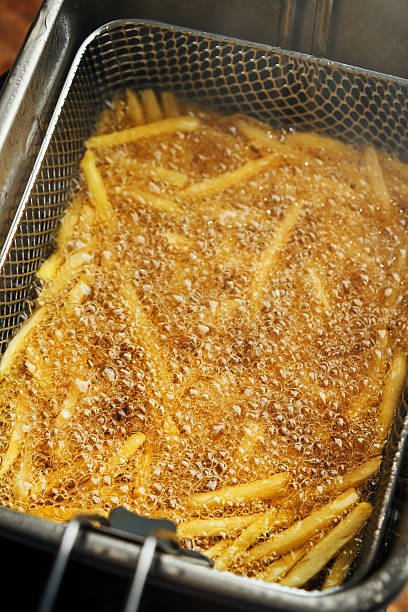
Is Vegetable Oil Good for Deep Frying? Complete Guide to Choosing the Best Frying Oil
If you are wondering “is vegetable oil good for deep frying?”, the short answer is yes—but the specific oil matters.
Deep frying requires an oil that can tolerate sustained high temperatures while providing a clean taste and reliable frying performance. Refined vegetable oils such as sunflower, canola, corn, soybean, safflower, and peanut oil are commonly suitable because they have relatively high smoke points.
For restaurants, food processors, wholesalers, distributors, and HoReCa buyers, the decision goes beyond simply choosing a bottle marked “vegetable oil.” Frying stability, fatty-acid composition, refining quality, flavor neutrality, packaging, storage conditions, and consistency between batches all matter.
Among the available options, refined sunflower oil—and particularly high-oleic sunflower oil—is an important choice for commercial frying applications.
Is Vegetable Oil Good for Deep Frying?
Yes. Many refined vegetable oils work well for deep frying.
Deep frying commonly operates around 175–190°C (347–374°F), depending on the food and equipment. The USDA lists sunflower, canola, corn, peanut, safflower, grapeseed, olive and vegetable oils among oils suitable for deep frying because of their relatively high smoke points.
A suitable frying oil should offer:
- Adequate smoke point
- Good heat and oxidative stability
- Neutral or desirable flavor
- Consistent refined quality
- Low initial deterioration
- Suitable fatty-acid composition
- Reliable food-grade production and storage
The important distinction is that not every vegetable oil performs identically under prolonged heating.
For occasional home frying, several refined vegetable oils can perform satisfactorily. For restaurants, industrial fryers and food manufacturing, where oil can remain hot for extended periods, stability becomes much more important.
What Makes an Oil Suitable for Deep Frying?
1. High Smoke Point
The smoke point is the temperature at which an oil visibly begins to smoke and degrade rapidly.
A frying oil should have a smoke point comfortably above its normal operating temperature. USDA guidance gives an approximate smoke point of 410°F (210°C) for sunflower oil, although actual smoke points vary according to refining, oil condition and composition.
The objective should never be to operate a fryer close to the oil’s smoke point.
2. Oxidative Stability
Smoke point alone does not tell you how well an oil will withstand repeated heating.
Oxidative stability is especially important for commercial frying. Oil continuously exposed to heat, oxygen, food particles and moisture gradually deteriorates.
Fatty-acid composition influences this process considerably. Oils containing more oxidation-resistant fatty acids can provide greater stability under demanding frying conditions.
3. Neutral Flavor
A neutral oil allows the natural flavor of fried foods to remain prominent.
This is one reason refined sunflower oil is used across foodservice and food-processing applications. Properly refined and deodorized sunflower oil provides a mild, neutral sensory profile suitable for products such as:
- French fries
- Fried chicken
- Fish
- Doughnuts
- Potato chips
- Breaded vegetables
- Frozen prepared foods
- Restaurant frying applications
4. Consistent Quality
Commercial buyers should evaluate more than the name of the oil.
Important purchasing considerations can include free fatty acids, peroxide value, moisture and volatile matter, impurities, color, fatty-acid profile and other parameters stated in the supplier’s specification or Certificate of Analysis.
Is Sunflower Oil Good for Deep Frying?
Refined sunflower oil can be suitable for deep frying.
USDA food-safety guidance specifically includes sunflower oil among oils recommended for deep frying.
However, sunflower oils can have substantially different fatty-acid profiles. This becomes important when oil is subjected to prolonged or repeated heating.
Research comparing sunflower oils with different oleic-acid levels has demonstrated that fatty-acid composition affects frying stability. High-oleic and appropriately formulated mid-oleic sunflower oils can provide considerably greater oxidative resistance than conventional high-linoleic sunflower oil.
Therefore, a commercial buyer asking for sunflower oil for deep frying should specify whether standard refined sunflower oil or high-oleic sunflower oil is required.
High-Oleic Sunflower Oil for Deep Frying
High-oleic sunflower oil contains a larger proportion of oleic acid, a monounsaturated fatty acid, compared with conventional high-linoleic sunflower oil.
Why does that matter?
Greater oleic content generally improves resistance to oxidation during prolonged heating. Research on sunflower oil has shown that increasing oleic acid and reducing highly polyunsaturated fatty acids can improve stability for high-temperature applications.
This makes high-oleic sunflower oil particularly interesting for:
Restaurants and HoReCa: Operations with frequent fryer use need predictable frying performance.
Snack manufacturers: Potato chips and similar foods require both heat stability and a relatively neutral oil.
Frozen-food manufacturers: Pre-fried products need controlled and consistent production conditions.
Industrial food processors: Continuous fryers place considerably greater stress on oil than occasional household cooking.
For these applications, buyers should request the supplier’s current product specification and COA rather than assuming that all sunflower oils have the same composition.
Standard vs High-Oleic Sunflower Oil
Conventional sunflower oil typically contains substantially more linoleic acid, while high-oleic sunflower oil contains considerably more oleic acid.
Both can be food-grade cooking oils, but their behavior during prolonged frying is not identical.
If the application involves occasional cooking, conventional refined sunflower oil may be sufficient. For demanding commercial deep frying, high-oleic sunflower oil is generally the more heat-stable option.
The exact product should nevertheless be evaluated using its specification and intended operating conditions.
H2: Technical Details
The following represents a typical procurement framework, not a guaranteed specification for every UKROILSTAR shipment. Final contractual specifications should be confirmed on the applicable Technical Data Sheet and batch Certificate of Analysis.
| Technical Parameter | Typical Purchasing Requirement / Description |
|---|---|
| Product | Refined Sunflower Oil |
| Alternative | High-Oleic Refined Sunflower Oil |
| Application | Cooking, frying and food processing |
| Appearance | Clear liquid, characteristic of refined oil |
| Flavor/Odor | Neutral to mild after refining/deodorization |
| Frying suitability | Product-dependent; high-oleic preferred for demanding extended frying |
| Main fatty-acid consideration | Oleic/linoleic composition |
| Trans fat | Confirm from current product specification |
| Free fatty acids | Confirm by COA |
| Peroxide value | Confirm by COA |
| Moisture/volatile matter | Confirm by COA |
| Origin | Ukraine, where contractually specified |
| Documentation | Subject to shipment/product requirements |
| Storage | Cool, dry location protected from direct sunlight and heat |
| Shelf life | Confirm for selected packaging and batch |
Product Specifications Table of Contents
Buyers evaluating bulk Ukrainian sunflower oil should request a specification covering, where applicable:
- Product description
- Country of origin
- Refining method/product grade
- Fatty-acid composition
- Oleic-acid percentage
- Linoleic-acid percentage
- Free fatty acids
- Peroxide value
- Moisture and volatile matter
- Insoluble impurities
- Color
- Odor and taste
- Storage requirements
- Shelf life
- Packaging configuration
- Batch/lot identification
- Certificate of Analysis
- Applicable food-safety or origin documentation
This gives professional buyers far more useful information than purchasing solely according to price per liter or metric ton.
H3: Packaging Information
Sunflower oil can be supplied in different packaging formats depending on the target market, distribution channel and order quantity.
Common commercial formats include:
| Packaging | Typical Application |
|---|---|
| 1L PET | Retail |
| 1.5L PET | Retail/private label |
| 3L PET | Retail/family size |
| 5L PET | Retail and foodservice |
| 10L container/jerrycan | HoReCa |
| 20L jerrycan | Restaurants and commercial kitchens |
| Flexitank | Bulk importers and industrial users |
| Tanker | Large-scale industrial purchasing |
Packaging availability, bottle design, palletization, container loading and private-label requirements should be confirmed before quotation.
Ukrainian Sunflower Oil for Wholesale Buyers
Ukraine has an established international sunflower-oil trade, and refined Ukrainian sunflower oil continues to appear in international shipment data in both packaged and bulk formats.
For B2B procurement, buyers should focus on verifiable shipment-specific information rather than generic claims about origin or quality.
A professional RFQ should specify:
Product: Refined sunflower oil or high-oleic sunflower oil
Quantity: Metric tons or number of containers
Packaging: PET bottles, jerrycans, flexitank or bulk
Destination: Named port/country
Incoterm: EXW, FCA, FOB, CFR or CIF
Private label: Yes/No
Required documentation: COA, origin, sanitary/health documentation and other applicable certifications
Payment terms: Requested instrument/structure
Application: Retail, HoReCa, food manufacturing or deep frying
This enables the supplier to prepare a commercially meaningful quotation.
Ukrayna Ayçiçek Yağı – Türkiye İçin Toptan Tedarik
Türkiye’deki ithalatçılar, distribütörler, gıda üreticileri ve HoReCa tedarikçileri için Ukrayna ayçiçek yağı önemli bir ticari arama kategorisidir.
Ukrayna ayçiçek yağı, Ukrayna ayçiçek yağı fiyatı, toptan ayçiçek yağı, rafine ayçiçek yağı, ayçiçek yağı tedarikçisi, ayçiçek yağı ihracatçısı, yemeklik yağ toptan, yüksek oleik ayçiçek yağı, yüksek oleik yağ, bulk ayçiçek yağı, ayçiçek yağı distribütörü, restoran kızartma yağı, HoReCa ayçiçek yağı, Ukrayna’dan ayçiçek yağı ithalatı, CIF Türkiye ayçiçek yağı.
Turkish buyers searching “Ukrayna ayçiçek yağı fiyatı” should request a current quotation because international oil and freight markets change. The quote should clearly identify product grade, packaging, volume, loading point, destination and Incoterm.
Is Vegetable Oil Healthy for Deep Frying?
This question needs a more careful answer than simply calling one oil “healthy” or “unhealthy.”
Deep frying changes both the food and the frying medium. Oil quality can deteriorate through repeated heating, particularly when exposed to excessive temperature, oxygen, moisture and food residues.
For practical frying performance, use an oil designed for the application, maintain appropriate fryer temperature and replace deteriorated oil according to applicable food-safety practices.
Never allow frying oil to reach uncontrolled smoking temperatures.
USDA also warns that deep-frying oil can exceed 400°F and presents serious burn and fire hazards. Water should never be used on a grease fire.
Which Vegetable Oil Is Best for Deep Frying?
There is no universal winner for every kitchen or manufacturing operation.
Refined sunflower, high-oleic sunflower, canola, peanut, corn and other appropriate refined oils can all be used depending on the application.
For buyers prioritizing neutral flavor plus enhanced oxidative stability, high-oleic sunflower oil deserves particular consideration.
The best commercial choice depends on:
- Fryer operating temperature
- Length of frying cycles
- Food being produced
- Desired flavor profile
- Required oil life
- Product specifications
- Local regulations
- Supply reliability
- Packaging
- Delivered cost
For industrial buyers, the cheapest oil per ton is not automatically the lowest-cost frying solution. Performance and usable fry life also affect operating economics.
How to Store Sunflower Oil
Store unopened sunflower oil according to the manufacturer’s specified conditions, normally in a cool, dry place away from direct sunlight and excessive heat.
For bulk commercial operations, good stock rotation is essential.
Use a first-in, first-out (FIFO) inventory system and maintain traceability by batch or lot number.
Packaging should remain properly sealed to minimize unnecessary exposure to air, moisture and contamination.
FAQ
Can you use vegetable oil in a deep fryer?
Yes. Many refined vegetable oils are suitable for deep frying when used at appropriate temperatures. Sunflower, canola, corn, peanut and safflower oils are among the options identified by USDA guidance.
Is sunflower oil good for frying chicken?
Refined sunflower oil can be used for fried chicken. For intensive restaurant or industrial frying, high-oleic sunflower oil can offer improved oxidative stability.
Is sunflower oil better than regular vegetable oil?
“Vegetable oil” is a broad category rather than one specific oil. Performance depends on the source oil, fatty-acid composition, refining and intended use. A specified high-oleic sunflower oil may offer advantages where prolonged high-temperature stability is important.
What temperature should I use for deep frying?
Many foods are fried around 175–190°C (347–374°F), although the correct temperature depends on the product and recipe. USDA examples include foods fried between approximately 320°F and 375°F.
Can businesses buy Ukrainian sunflower oil in bulk?
Yes. Commercial sunflower oil is traded in retail packaging as well as larger foodservice and bulk formats. Buyers should request current availability, specification, COA, packaging configuration, Incoterm and delivered quotation for their destination.
Conclusion: Is Vegetable Oil Good for Deep Frying?
Yes, suitable refined vegetable oil is good for deep frying, provided that the oil type and specification match the application.
For everyday frying, several refined vegetable oils can perform effectively. For restaurants, HoReCa operations and industrial food processors requiring greater stability during extended frying, refined high-oleic sunflower oil can be particularly attractive.
Commercial buyers looking for Ukrainian sunflower oil, refined sunflower oil, high-oleic sunflower oil, bulk cooking oil or private-label sunflower oil should compare products based on verified specifications—not marketing language alone.
